
Multiplayer · Q&A
Dimraeth Multiplayer: 1-8 Player Co-op
How dimraeth multiplayer works in Early Access: 1-8 player co-op, peer-to-peer hosting, no dedicated servers, solo play, and what carries between worlds.
Short answer: dimraeth multiplayer is online co-op for up to eight players, and the character you build is yours to carry between your friends' worlds. As of 21 September 2026 (EA build 0.107.7725) it is peer-to-peer rather than server-based, which means one player hosts the session, there are no dedicated or private servers, and there is no local or split-screen mode. You can also ignore co-op entirely, because the game is designed to be finished solo.
The rules as stated by the studio
| Question | Answer | Source |
|---|---|---|
| Party size | Up to 8 players, described as "up to seven other players" | Steam store description and official FAQ |
| Connection model | Peer-to-peer; one player acts as the host | Official FAQ (single source, first-party) |
| Dedicated or private servers | Not supported "at this time" | Official FAQ (single source, first-party) |
| Local or split-screen | Not offered; online co-op only | Official FAQ (single source, first-party) |
| Solo play | Fully supported, "from start to finish" | Official FAQ and Steam Single-player category |
| Is it an MMO? | No — "a co-op RPG designed for small groups of players (up to 8)" | Official FAQ |
| Cross-play | Not applicable; the game ships on PC only | Steam platform data |
The studio's Steam description uses the phrase "seamless drop-in/drop-out co-op", which is the useful part for planning: you are not meant to schedule a locked lobby, and players can join or leave inside a session. Two of the rows above are single-source, first-party statements: the peer-to-peer and no-dedicated-server wording appears in the official FAQ rather than in several independent places, so treat it as the studio's stated position as of 21 September 2026 rather than a cross-checked fact.
How joining a game actually works
Two join routes have been seen working in the build: the in-game multiplayer lobby and the Steam friends list, which a developer in the Steam discussion thread on joining multiplayer confirms should both function. In the same thread the developer describes world settings that matter when a join fails, including a world set to "friends only" and an option to restrict a world to "new characters only". Both details come from a single developer reply made during the April 2026 demo period, so treat them as indicative of how hosting is set up rather than as current, documented behaviour.
The same thread contains the most practical troubleshooting line available: "if players are on different versions you won't see their game. Make sure the other person is updated." That single developer statement explains most "I cannot see my friend" reports, and it matters more in Early Access than it would in a finished game, because the build moves between hotfixes.
What peer-to-peer hosting means in practice
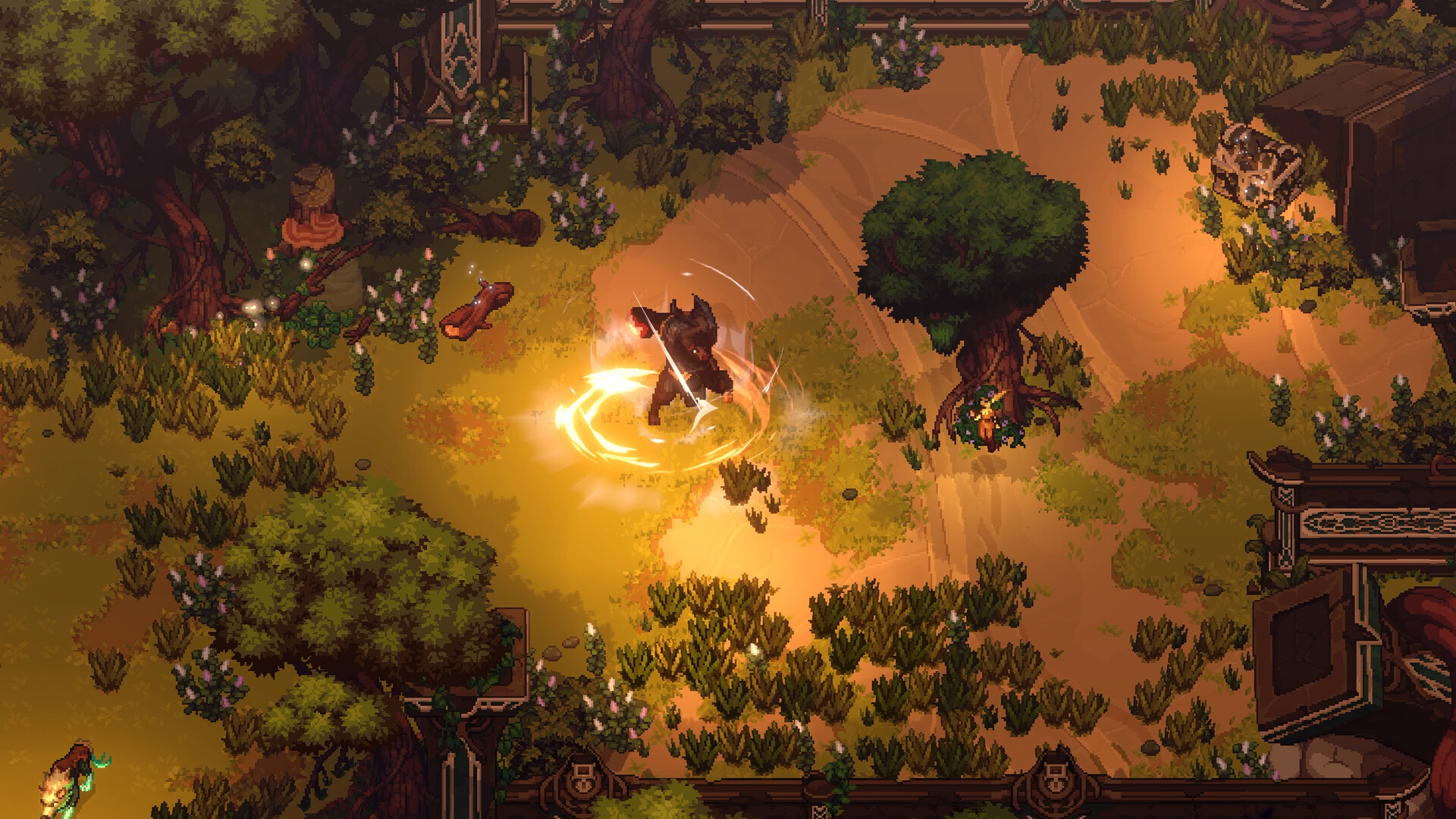
The official FAQ is unambiguous: "Dimraeth uses a peer-to-peer system for co-op play. That means one player acts as the host when you start a game with friends. We don't currently support dedicated or private servers." With no dedicated server in the picture, the session runs through the host's machine and connection, so the host's own stability sets the ceiling for everyone else.
That has a knock-on effect on how you organise a group. Because world progress is tied to a world rather than to your hero, the group needs one consistent host if it wants to keep the same village, the same recruited allies and the same story position. The Steam Community guides hub, read on 21 September 2026, already hosts player-written workarounds for exactly this, including a guide titled "Continue Your World Without the Original Host" and one about setting up a lobby for random players — a useful signal of where early co-op groups hit friction (single source — Steam Community guides hub).
It is also worth separating what is official from what players repeat. One creator describes the eight-player figure as mainly reflecting difficulty scaling, and another notes that downed players can be revived by friends; both come from YouTube coverage of pre-launch builds and are single-source creator claims, not studio statements (single source, to confirm).
What carries between worlds and what stays behind
This is the one co-op rule the studio does spell out, in its Steam store description: "Your hero's level, equipment, inventory, spells, and personal progression travel between worlds, while story progress, recruited allies, and buildings remain tied to each world." In plain terms, you keep your character when you visit someone else's game, but you do not carry their story and village back home with you.
What is not spelled out anywhere official is how loot is divided. Whether drops are personal to each player, shared on the ground, or assigned by some other rule is not stated in the FAQ, the store page or the announcement text, and the search demand around personal loot and shared progress is currently answered only by community discussion. Drop rates and any per-player loot rules should be treated as unconfirmed until the studio says otherwise. The same applies to whether a world can be handed from one host to another, and to whether world progress ever transfers.
Playing solo, and switching later
Solo is not a compromise mode. The official FAQ says the game "can be played solo from start to finish" and is "fully designed to be enjoyable on your own", and Steam lists Single-player as a category alongside the co-op tags. Because character progression travels between worlds, starting alone and joining a friend later does not force a reroll — you bring the same hero.
If you have no group at all, the official FAQ answers that case directly: head to the #🙋|looking-for-group channel on the official Discord, described as the place to find a quick co-op session, someone to explore with, or a full party for a boss fight. The channel list and the rest of the official destinations are catalogued on community.
Realistic notes for playing with friends now
Plan around updates first. Because mismatched versions stop sessions from appearing, agree with your group to update together after each hotfix, and check the patch notes rather than assuming a broken lobby. Second, decide who owns the world before you invest time in it, since story progress, allies and buildings stay with that world and that host. Third, remember that the host's connection is the session, so the friend with the stablest line is usually the right host.
Beyond that, this is an Early Access co-op game with a 1–8 player design, not a service game with matchmaking infrastructure. There is no cross-play question to answer because the game ships on PC and Steam Deck only, and no console friends can join until the studio confirms console plans, which it has not done. If co-op performance and pacing change over the coming months, the studio says it will tune "combat, co-op pacing, and progression" based on community feedback during Early Access.
What remains unconfirmed
- Loot distribution between players (personal versus shared) and drop rates — no official wording found (to confirm).
- Whether a party's difficulty scales with the number of players — a creator claim only (single source, to confirm).
- Whether world progress can be moved between hosts, or a world reused by a different host.
- Whether dedicated servers arrive later; the studio's wording is "not at this time", which leaves the door open without promising anything.
- Whether joining a friend's world advances your own story progress — the official split between hero progression and world progress implies it does not, but the FAQ does not say so directly.
FAQ
- How many players can play Dimraeth together?
- Up to eight, host included — the studio advertises seamless drop-in, drop-out co-op for up to eight players, and its Steam description mentions playing "alone or with up to seven other players". Solo is fully supported, so the same game covers one player or a full group (Steam store description and official FAQ, read 21 September 2026).
- Does Dimraeth have dedicated or private servers?
- No. The official FAQ answers directly: "Dimraeth uses a peer-to-peer system for co-op play. That means one player acts as the host when you start a game with friends. We don't currently support dedicated or private servers." The word "currently" is the studio's own, so treat this as the position as of 21 September 2026 rather than a permanent promise (single source — official FAQ).
- Does Dimraeth support split-screen or local co-op?
- No. The official FAQ states that Dimraeth supports online co-op but does not offer local or split-screen multiplayer, so two people on one PC or console are not covered (single source — official FAQ). There is no console version either, so co-op is PC-to-PC only. See platform status.
- Does my character carry over between worlds in Dimraeth?
- Yes, according to the studio's own store description: your hero's level, equipment, inventory, spells and personal progression travel between worlds, while story progress, recruited allies and buildings stay tied to each world. How loot is divided among players, and the drop rates behind it, are not explained anywhere official — treat those as unconfirmed.
- Why can I not see my friend's game in the lobby?
- The most likely cause is a version mismatch. A developer reply in the Steam discussion thread on joining multiplayer states: "if players are on different versions you won't see their game. Make sure the other person is updated." Early Access builds change quickly, so update before you host (single source — developer reply, April 2026 demo period).
References
- How do you join multiplayer? :: Dimraeth General Discussions
- Multiplayer modes :: Dimraeth General Discussions
- A New Open World Roleplaying Sandbox! - Dimraeth
- New Multiplayer RPG Feels Like An MMORPG! - Dimraeth
Facts on this page are compiled from the references above. Items marked "to confirm" are single-source and not yet verified.